
With the fresh infections, the total number of Indians infected with the virus on the vessel rose to 12, the Indian embassy said.
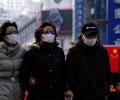
Eighty-six deaths were reported in mainland China with 3,399 fresh cases from 31 provincial-level regions, the country's National Health Commission said on Saturday.

In the travel advisory, the Health Ministry again asked people to refrain from travelling to China in view of the coronavirus outbreak in its Hubei province and said travellers on return from the neighbouring country could be quarantined.
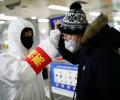
The reality is, the worldwide toll could have been checked within time if China had been more transparent and had warned countries regarding the new strain of Severe Acute Respiratory Syndrome (SARS)-like infection, which originated at a 'wet market' in its province of Hubei late last year.

In a video, Labuschagne is getting throwdowns from his friend in his backyard, even as his dog seemed to be waiting in anticipation behind the stumps.

The national football players are providing the needy, in their respective localities, monetary aid and food items, besides setting up camps and spreading awareness about social distancing.

A cruise ship carrying over 450 people, mostly elderly, capsized because of a cyclone in the murky waters of Asia's longest Yangtze River in China's Hubei province as rescuers on Monday raced against time to find survivors with hundreds missing and at least five dead.

The death toll in China's coronavirus rose sharply to 425 with 64 deaths on Monday and the number of those infected with the deadly disease rose to 20,438, Chinese health authorities said on Tuesday.

Japanese Prime Minister Shinzo Abe said on Monday that the government will keep in close touch with all relevant groups to ensure a virus outbreak does not have affect the Summer Olympics. Olympics Minister Seiko Hashimoto said organisers are not considering cancelling the Olympics, which start on July 24.
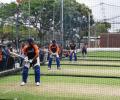
'Safety first' is one of the primary considerations of the ICC's back-to-cricket guidelines and involving the governments at all stages is a must.
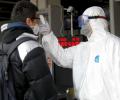
An outbreak of a pneumonia-like illness that started in the city of Wuhan in China has put health authorities on high alert around the world. The new coronavirus-named 2019-nCoV-is thought to have originated in the food market of the central China metropolis and has since infected more than 4,000 people worldwide.

The wet market was where a variety of live animals were traded until it was shut down following fears that the coronavirus had jumped to humans either from bats or pangolins.

Exports of 13 APIs - including paracetamol, tinidazole, metronidazole, vitamin B1, vitamin B6, vitamin B12, acyclovir, progesterone - along with formulations made from these APIs, would be restricted.
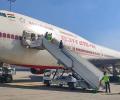
The aircraft was to carry a large consignment of medical supplies to China and bring back more Indians from Wuhan.

The industry is keeping a close watch to see if shuttered factories in China reopen in the coming days and supplies resume sometime this week.

These 8 images that show we live in an odd world
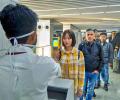
The government will also evacuate Indians on Friday from China's Wuhan city, the epicentre of the deadly Coronavirus, which has spread to at least 17 countries already.

This week's collection of unbelievably unusual images from across the world.

Here's this week of photos that prove we live in a mad world.
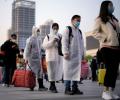
China, besides denying the United States allegations that COVID-19 has emerged from a bio-lab in Wuhan, also rejected that it emanated from a wet market in the central Chinese city from bats or pangolins before infecting humans.

Here's a presentation of some of the best photos from around the world in the month gone by.
Hydroxychloroquine has been identified by the US Food and Drug Administration as a possible treatment for the COVID-19 and it is being tested on more than 1,500 coronavirus patients in New York.

This week's collection of unbelievably unusual images from across the world
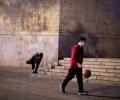
'India had done the right thing to go for a nationwide lockdown, but the major problem for the country could surface when the monsoon season arises as people's immunity levels go down.'

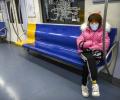
As the virus continued to spread at an alarming rate, Chinese President Xi Jinping on Monday warned officials of punishment if they shirked responsibility in tackling the virus outbreak.
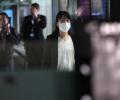
India on Sunday opened a third hotline in view of 'large number' of phone calls from the Indians who are mostly students, the Indian Embassy in Beijing said.

The death toll in the tragedy in the mighty Yangtze rose to 65 as rescuers retrieved another 39 bodies till morning.

'We're going to have to work with the Health Department and Government authorities to find out a way in which even if a player tests positive, the whole tournament isn't cancelled'

The robots are here!! A cylindrical robot rolls into a treatment room to allow healthcare workers to remotely take temperatures and measure blood pressure and oxygen saturation from patients hooked up to a ventilator. Another robot that looks like a pair of large fluorescent lights rotated vertically travels throughout a hospital disinfecting with ultraviolet light. These are just a few of the robots which are being used during the COVID-19 pandemic, from health care in and out of hospitals, automation of testing, supporting public safety and public works, to continuing daily work and life. Here's a look at how Artificial Intelligence is being used in this war against COVID-19.

This week's collection of unbelievably unusual images from across the world.

Forced out of grounds, tracks and courts by the coronavirus pandemic, sports events may help in the long run, but medical experts on Wednesday warned that resuming anything this year could mean putting lives at risk. When sporting events do eventually make a comeback, which some of the region's top doctors believe is not going to happen until at least the next six months or may be nine, it may not be the same initially.

Fighting the coronavirus pandemic is hard, in fact it seems impossible. Doctors, nurses, carers and paramedics around the world are facing an unprecedented workload in overstretched health facilities, and with no end in sight. They are working in stressful and frightening work environments, not just because the virus is little understood, but because in most settings they are under-protected, overworked and themselves vulnerable to infection. The risk to doctors, nurses and others on the front lines has become plain: Italy has seen at least 18 doctors with coronavirus die. Spain reported that more than 3,900 health care workers have become infected. In dire times such as these, people are trying their best to show their appreciation to the frontline workers. Here are some images -- from clapping for them to singing for them.. A 'thank you' in any way goes a long way around.

Sport coming to a standstill owing to the COVID-19 pandemic is a 'welcome rest' for India cricketers, feels head coach Ravi Shastri, who has spent barely 10-11 days at home since leaving for the World Cup last May.

List of international sports events affected by the coronavirus that has killed over 900 people and infected more than 40,000 in China

State Health Minister K K Shailaja told reporters that the government has declared the epidemic as a 'state calamity' to take all necessary steps to ensure that the outbreak is effectively controlled. A medical bulletin issued by the government said the health status of all the three students, who tested positive for the virus, was 'satisfactory'.
Airlines flying in from any airport in China including Hong Kong have been asked to make in-flight announcements requesting passengers with history of fever and cough and travel to Wuhan city in the past 14 days to self-declare at the port of arrival in order to facilitate early isolation, according to an official statement.
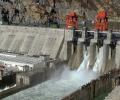
The over 3,800-km-long Brahmaputra, one of the longest rivers in the world passes through China, India and Bangladesh and has several tributaries and sub-tributaries.
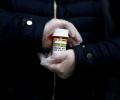
As the pandemic spreads and the urgency for effective treatment of COVID-19 mounts, several countries, including the US, have started relying heavily on HCQ, majorly used in the treatment of malaria and rheumatoid-arthritis.
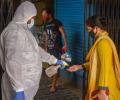
The survivor from Thrissur, who returned from Wuhan -- the epicentre of the pandemic -- recounts her road to recovery and her future plans. Shine Jacob reports
